Repair or Scrap? How to Decide What to Do With Your Old AC Unit
Every summer in Jeddah and Makkah, the same decision lands on thousands of households and businesses: the old AC is struggling again, the technician is quoting for another repair, and you are wondering whether you are maintaining a good machine or feeding a dying one. There is no single answer, but there is a clear way to decide. This guide walks through the honest signs that an AC unit is reaching the end, the repair maths that actually matters, when repairing still makes sense — and what happens, and what your unit is worth, if you decide to sell it as scrap.
The signs your AC is near the end
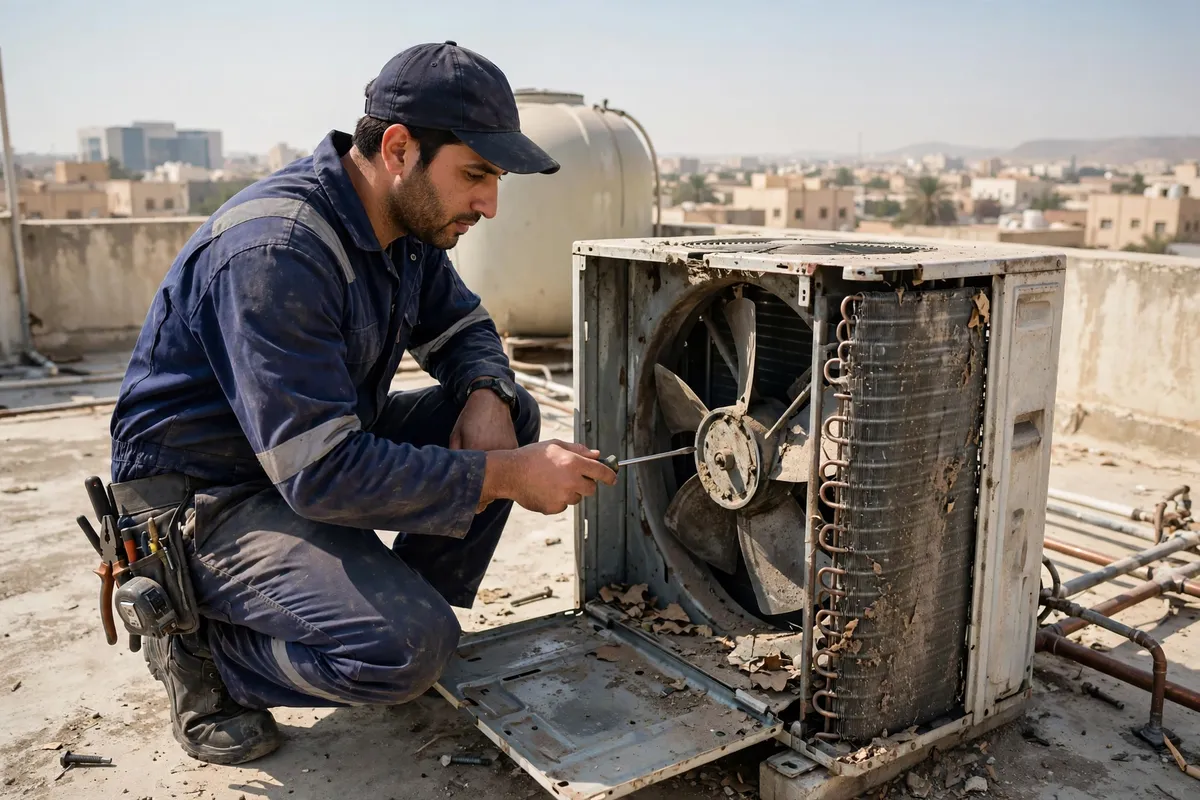
Air conditioners rarely die in one dramatic moment. They fade. Rooms take longer to cool than they did two summers ago. The unit runs almost constantly yet never quite reaches the temperature on the remote. Ice appears on the pipes, water drips where it should not, or the outdoor unit has grown noticeably louder — a compressor working far harder than it should. Electricity bills creep up even though your usage has not changed, because an ageing unit draws more power to deliver less cooling.
Age ties these signs together. A split or window unit that has served through ten or more Saudi summers has lived a hard life: coastal humidity in Jeddah corrodes coils and fins, dust loads the filters and fans, and the compressor has cycled hundreds of thousands of times. Any one symptom can be repaired. When several arrive together, the machine is telling you something.
Run the repair maths honestly
The most useful question is not “can it be fixed?” — almost anything can be fixed — but “what am I buying with this repair?” A minor part, a sensor, a fan motor or a gas top-up on a healthy system buys you years. A compressor replacement is different: the compressor is the heart of the unit, and replacing it on an old machine is closer to buying a new heart for an old body. The coil is still corroded, the electronics are still aged, and the next major failure is already queuing behind this one.
A practical rule used by honest technicians: when a single repair on an older unit approaches a large share of the cost of a new, efficient replacement, replacement is usually the better spend — and the old unit still has scrap value that offsets the new one’s cost. Two further checks sharpen the decision. First, the refrigerant: older units running on R22 gas face a phase-out, and topping up an R22 system gets harder and less sensible every year. Second, repetition: if this is the third callout in two summers, you are no longer maintaining — you are renting your own AC back from the repair shop, one visit at a time.
When repairing still makes sense
Scrapping is not always the answer, and a good buyer will tell you so. Repair is the right call when the unit is relatively young, the fault is small and isolated — a capacitor, a remote sensor, a drainage blockage, a fan bearing — or the system is a large central or ducted installation where replacement is a major project rather than a purchase. If a technician you trust says the compressor and coil are sound, believe the machine has life left and maintain it properly: clean filters, clear drainage and an annual service genuinely extend an AC’s working years in this climate.
The decision flips when age, a major component failure and rising bills arrive together. At that point, money spent on repair is money not spent on the replacement that is coming anyway.
What your old AC is worth as scrap — and why
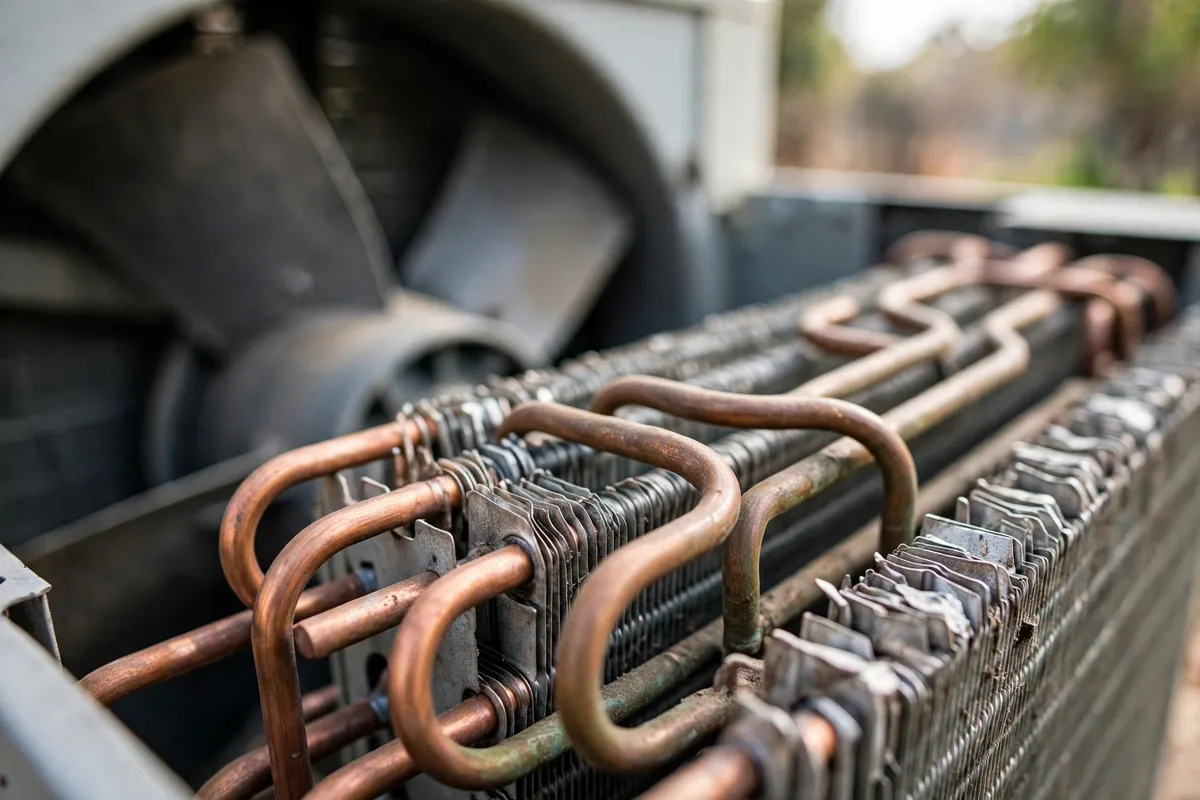
An air conditioner is one of the most valuable common items in the scrap trade, because of what is inside it. The heat-exchange coils are copper tube with aluminium fins. The compressor is a sealed steel unit containing an electric motor with copper windings. The body and frame are steel, the fan has its own smaller motor, and window units add a second coil set in a compact frame. Larger split systems, package units and chillers scale all of this up.
That mix is why buyers assess AC units as complete units rather than by rough weight alone: a 2-ton split in fair condition and a rusted-out window unit of similar size are not the same purchase. Size and tonnage, the number of indoor and outdoor units, and condition all feed the assessment. Sending a photo of the unit and its rating plate before collection gets you a realistic figure instead of a vague promise. You can read more on our dedicated AC scrap buyers page.
What happens to your AC after you sell it
Sellers sometimes ask where their old unit goes. The path is straightforward and worth knowing. First, the refrigerant gas is recovered properly rather than vented — this matters, because old gases are harmful in the atmosphere and recovering them is part of doing the job legally and responsibly. The unit is then dismantled: coils separated from the frame, the compressor opened so its motor and copper can be recovered, wiring and boards removed, and each metal stream — copper, aluminium, steel, motor scrap — sent into the recycling chain. Metals from your old AC go back into smelters and come out as new raw material; recycled copper and aluminium take a fraction of the energy of producing them from ore. Selling a dead AC to a proper buyer is, genuinely, the environmentally sound ending for it.
Before you sell: five quick checks
- Photograph the rating plate — brand, model and tonnage speed up your assessment.
- Count every part: outdoor unit, indoor units and any second system on the roof.
- Note whether the unit still runs — a working unit can be worth more than a dead one.
- Check the access: roof hatch, stairs or lift — and tell the buyer before the visit.
- You do not need paperwork to sell your own unit — just be there at collection.
Our collection process, from first photos to payment, is laid out on the How It Works page.
The decision, in one paragraph
Repair a young unit with a small fault. Replace — and sell the old unit as scrap — when age, a major failure such as the compressor, a phased-out refrigerant and climbing bills show up together. Either way, decide with numbers rather than hope: the cost of the repair, the realistic life it buys, and the value sitting in the old machine. If you would like that last figure, send us photos of your unit today and we will assess it the same day, collect it from your roof, wall or plant room, and pay you on the spot.
Frequently asked questions
Can I sell an AC unit that still works?
Yes. A working unit is assessed on its condition as well as its metal content, and working units often achieve more than dead ones. Send photos and the rating plate for an accurate figure.
Do I have to remove the AC from the wall or roof myself?
No. Our team handles removal and lifting as part of collection — just tell us where the unit is and what the access is like when you book.
Is the refrigerant gas removed safely?
Yes. Gas is recovered before dismantling rather than released, and the unit is then separated into copper, aluminium, steel and motor streams for recycling.
Can I sell only the outdoor unit?
Yes — outdoor units, indoor units, compressors and complete systems are all bought, individually or together.
Related Guides
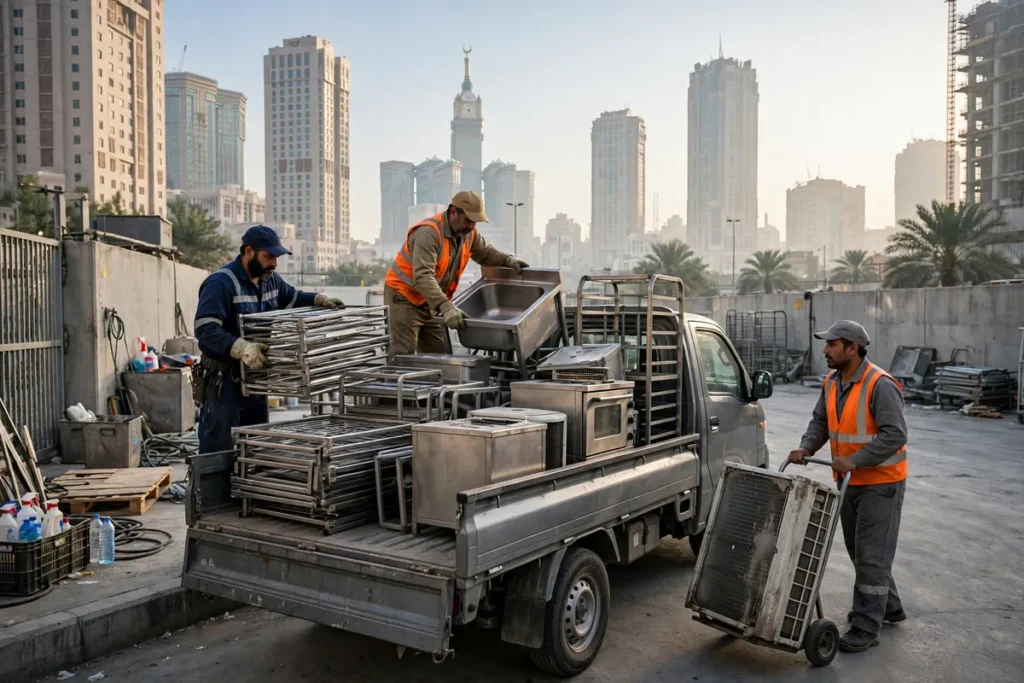 21 Oct 2026Selling Scrap in Makkah: A Practical Guide for Hotels, Businesses and HomeownersHotel refits, shop fit-outs and home renovations in Makkah produce valuable scrap. What to sell, when to schedule it, and how a proper paid…Read the guide →
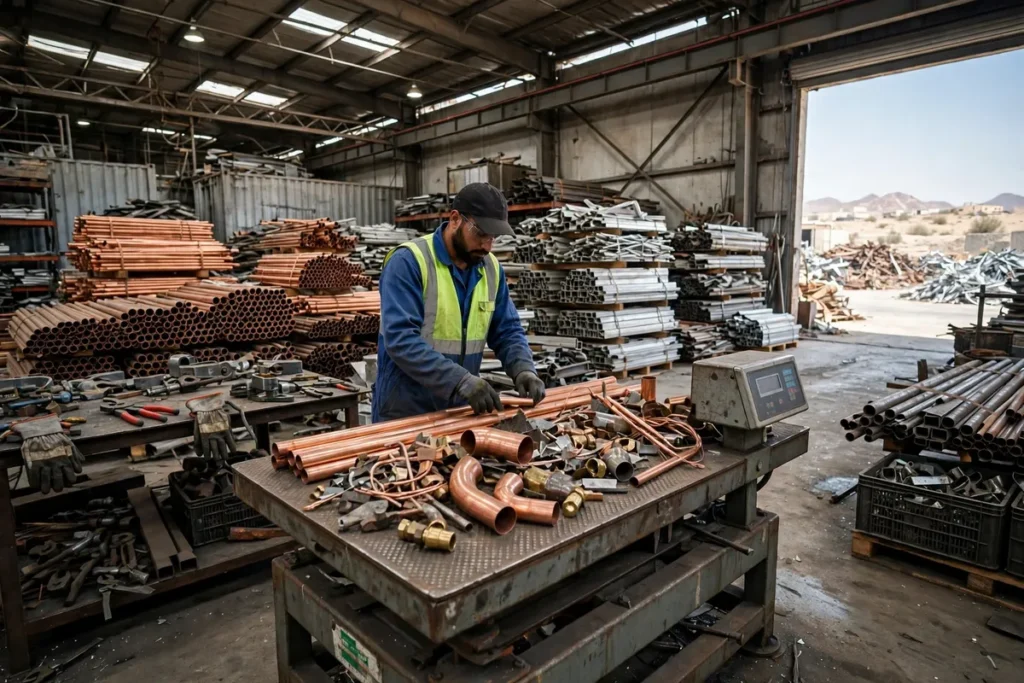 21 Oct 2026What Decides Your Scrap Metal Price? A Seller’s Guide for Jeddah & MakkahTwo buyers, two different prices for the same metal. Here is exactly what decides your scrap metal price in Jeddah and Makkah — and…Read the guide →