Industrial Scrap in Riyadh and Dammam: What to Sell
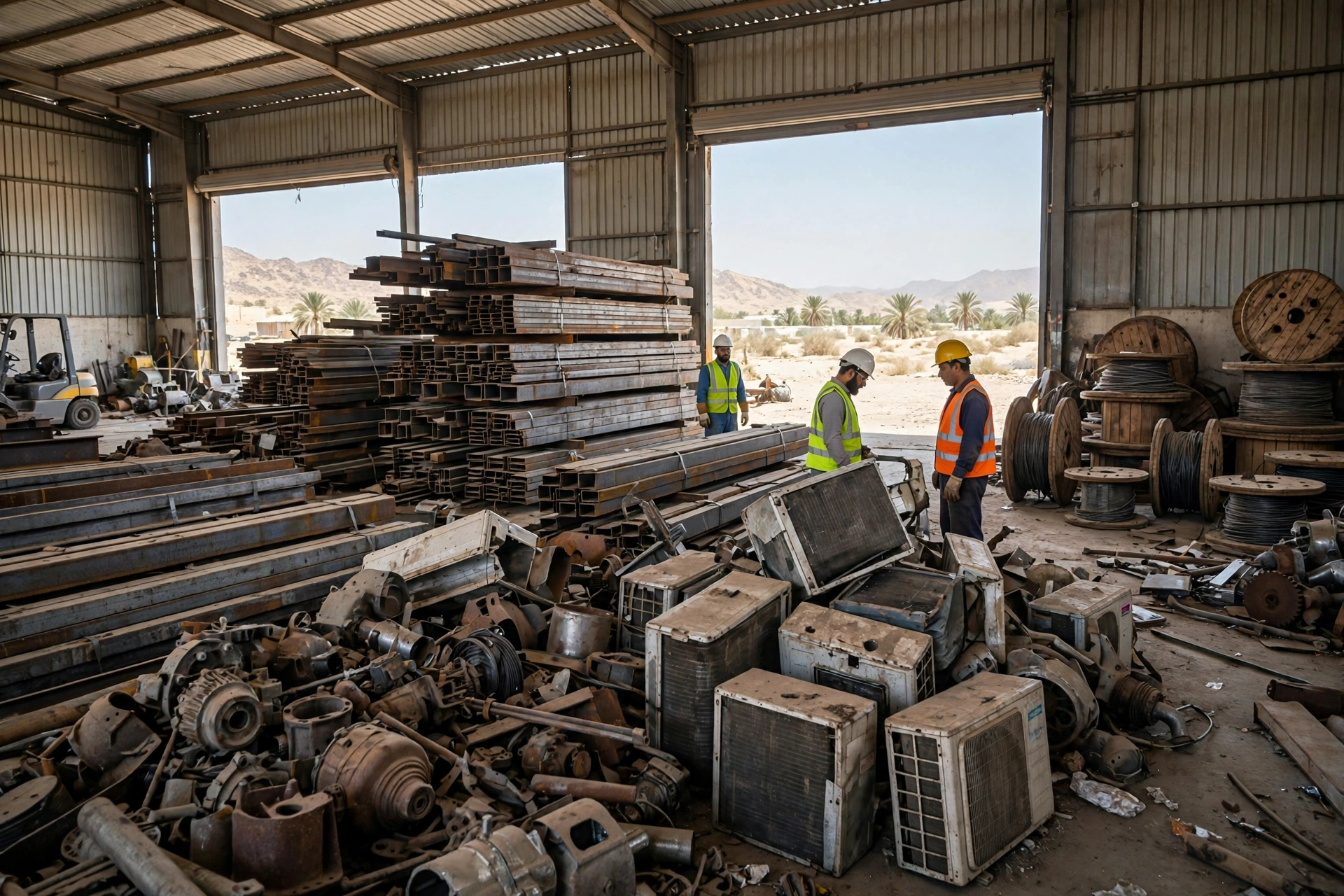
Household scrap is measured in items: one washing machine, one AC unit, a bag of cables. Industrial scrap is measured in loads: steel sections by the stack, cable by the drum, machinery by the piece, offcuts by the skip. The material is often the same — steel, copper, brass, aluminium — but the way it is sold, graded and collected is different, and sellers who understand that difference get a smoother visit and a fairer result.
This guide covers what counts as industrial scrap, how Riyadh’s and Dammam’s industrial piles differ, how an industrial collection works, and how to prepare a load from a factory, workshop or warehouse.
1. What counts as industrial scrap
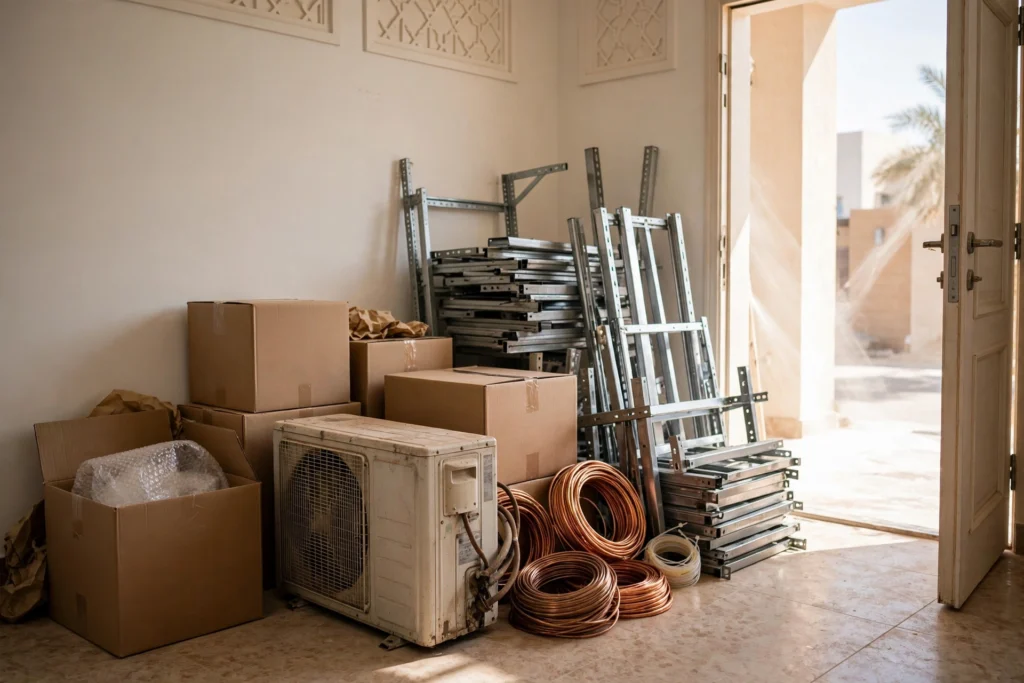
Industrial scrap is the metal left over from making, maintaining and replacing things at work: production offcuts, worn machinery parts, motors, pumps, compressors, transformers, cable drums and reels, steel beams and sections, racking and shelving, and workshop tools that have reached the end of their life. It also includes the building side of industry — rebar offcuts, aluminium profiles and demolition metal from fit-outs and refurbishments.
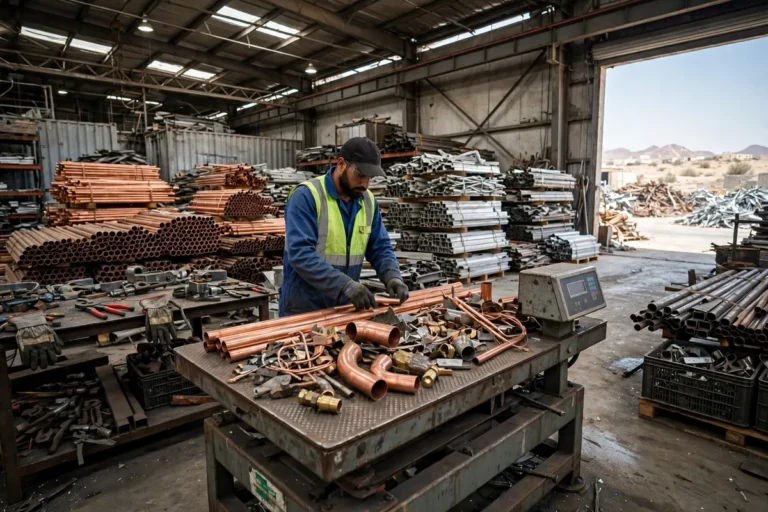
The key difference from household scrap is grading by load rather than by item. A single motor is graded as a unit; a tonne of mixed offcuts is graded by its dominant metals and how cleanly they are separated. That is why sorting matters more at industrial scale: copper kept apart from steel, brass apart from aluminium, and complete machines kept complete are all easier to grade than one mixed pile. Our industrial scrap buying service covers factory and warehouse material in volume, with site assessment where the load needs it.
2. Riyadh and Dammam: two different industrial piles
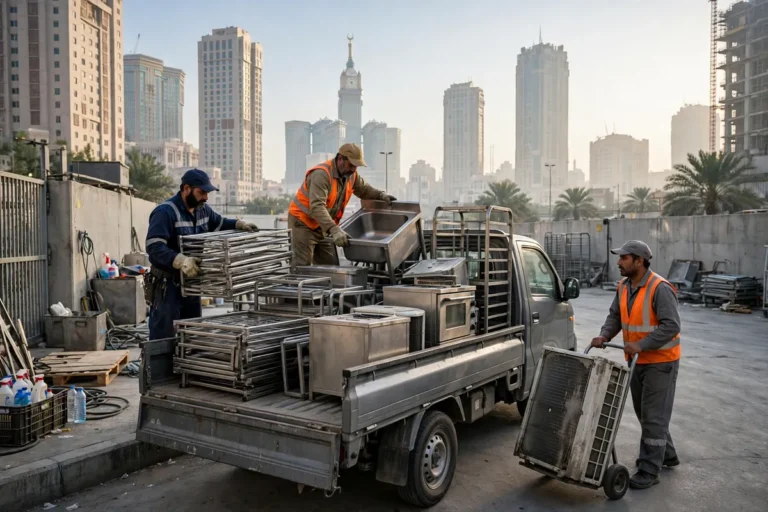
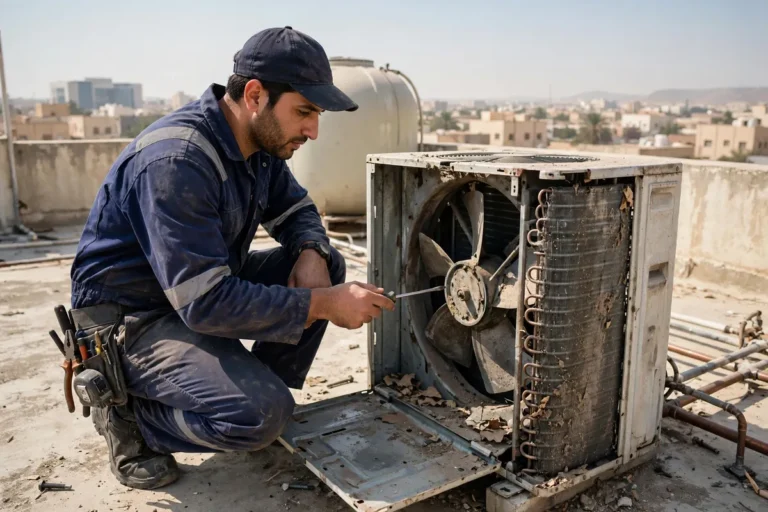
Riyadh’s industrial pile comes mostly from workshops, warehouses and construction supply: racking and shelving, aluminium frames, cable and wire, motors and compressors, and a steady stream of air conditioners from the city’s homes and offices. Loads tend to be mixed and recurring — the same materials, cleared every few months.
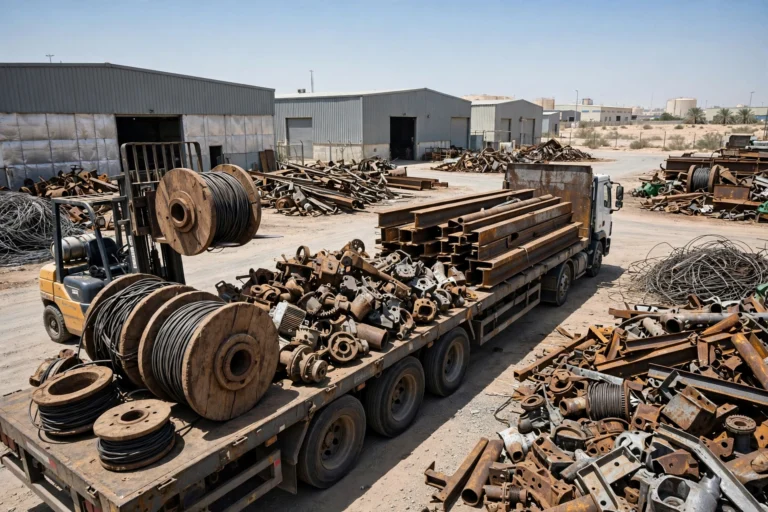
Dammam’s pile runs heavier. The Eastern Province’s factories, workshops and port supply chain produce steel sections, machinery parts and cable drums in quantities that need a truck rather than a pickup, and clearances are more often one-off projects than recurring routines. Our guides to selling scrap in Riyadh and selling scrap in Dammam cover each city’s sellers in more detail.
The practical point is the same in both cities: describe the load honestly at the start — what it is, roughly how much, and what the heaviest single item is — and the collection can be planned properly instead of improvised on the day.
3. How an industrial collection works
Send clear photos of what you have through our free quote form, with your city and area, a note about access — gate width, forklift availability, dock height — and the heaviest single item. You will receive a quotation based on the material and its grade, and a collection time that suits your work schedule.
For larger loads, a short site visit before the collection day is sometimes arranged, so the right vehicle and crew are booked from the start. On the collection day itself, the load is assessed, the grading is explained, and everything is weighed in front of you before payment on the spot. Phased clearances — one bay this week, another next — are common, and they are easy to schedule when they are known in advance.
What affects the result most is not the size of the pile but how it is presented. Sorted metal grades cleanly; mixed metal takes longer and grades lower. Complete machines grade as units; stripped machines grade as parts. Photos that show the whole load, including the awkward items at the back, mean the buyer arrives prepared instead of surprised.
4. Preparing an industrial load
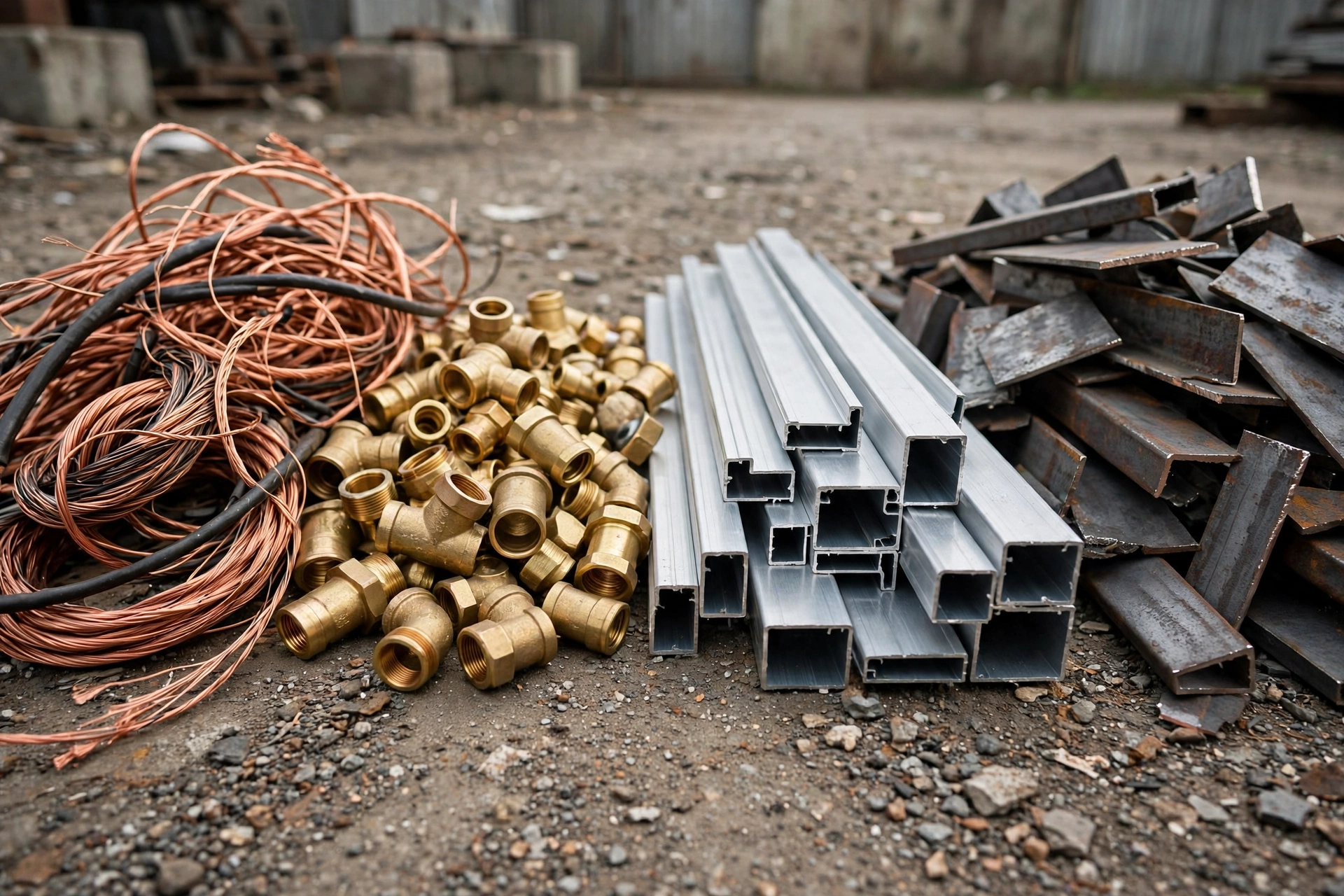
Start by making machines safe to move: disconnected from power, drained where relevant, and with loose parts secured. Then sort what you can by metal — copper, brass, aluminium, iron, steel — even roughly, into separate bays or piles. Keep cable drums wound and steel sections full-length where access allows; cutting for transport is fine, but it should be planned, not improvised.
Then plan the exit route. Measure the gate, check the forklift, and confirm the heaviest item can actually leave the way you expect. A load that cannot fit through the gate, or a machine that needs lifting equipment nobody booked, is the most common cause of a delayed collection. If cutting or dismantling is needed for access, mention it before the visit so the crew arrives with the right tools.
Finally, keep the scrap pile separate from anything staying on site — raw material, working tools, stock. Mixed piles are where mistakes happen: good stock loaded as scrap, or scrap left behind because it looked like stock. A clear split, even just a marked bay, prevents both.
5. A short checklist for industrial sellers
A little preparation makes the visit smooth:
- Send photos of the whole load, including the heaviest items.
- Sort metal roughly by type where you can: copper, brass, aluminium, iron, steel.
- Keep complete machines complete for grading.
- Mention forklift access, gate width, dock height and the heaviest single item.
- Say whether the clearance is one-off, phased, or recurring.
Frequently asked questions
What is the difference between industrial and household scrap?
The material is often the same, but the scale differs. Industrial scrap is graded by load — volume, weight and how cleanly metals are separated — while household scrap is graded more by item. Sorting and access planning matter more at industrial scale.
Can a factory arrange a recurring collection?
Yes. Workshops and factories that produce scrap regularly can arrange recurring visits, so metal does not pile up between clearances. Mention what repeats and roughly how often, and the visits can be scheduled around your work.
Should machinery be dismantled before collection?
No. Machines and motors are graded as complete units, so keep them whole where possible. If something must be cut for access, mention it in advance so the crew arrives prepared.
How is a large industrial load weighed and paid for?
The load is assessed, the grading is explained, and everything is weighed in front of you before payment on the spot. For very large loads, a site visit beforehand helps plan the vehicle, crew and weighing.
Do I need to clean or sort everything first?
No. Items are accepted as they are. Rough sorting by metal type helps grading and is worth doing where you can, but cleaning and dismantling are not required.
If you are selling industrial scrap in Riyadh or Dammam, send us clear photos of your load through our free quote form — we will assess it, explain the grading, weigh it in front of you and pay on the spot. We also collect in Jeddah, Makkah, Taif and King Abdullah Economic City.
Related Guides
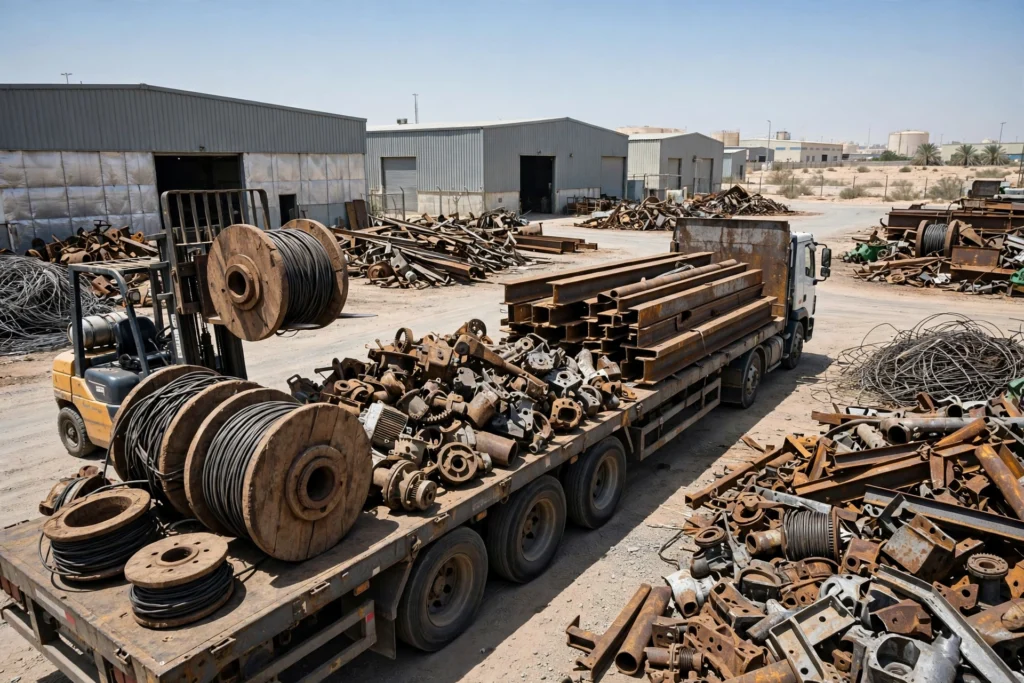 26 Oct 2026Selling Scrap in Dammam: A Guide for Homes and IndustryWritten by Ameer Hamza|Published on October 26, 2026 Dammam is the Eastern Province’s industrial city, and its scrap pile looks different from anywhere else…Read the guide →
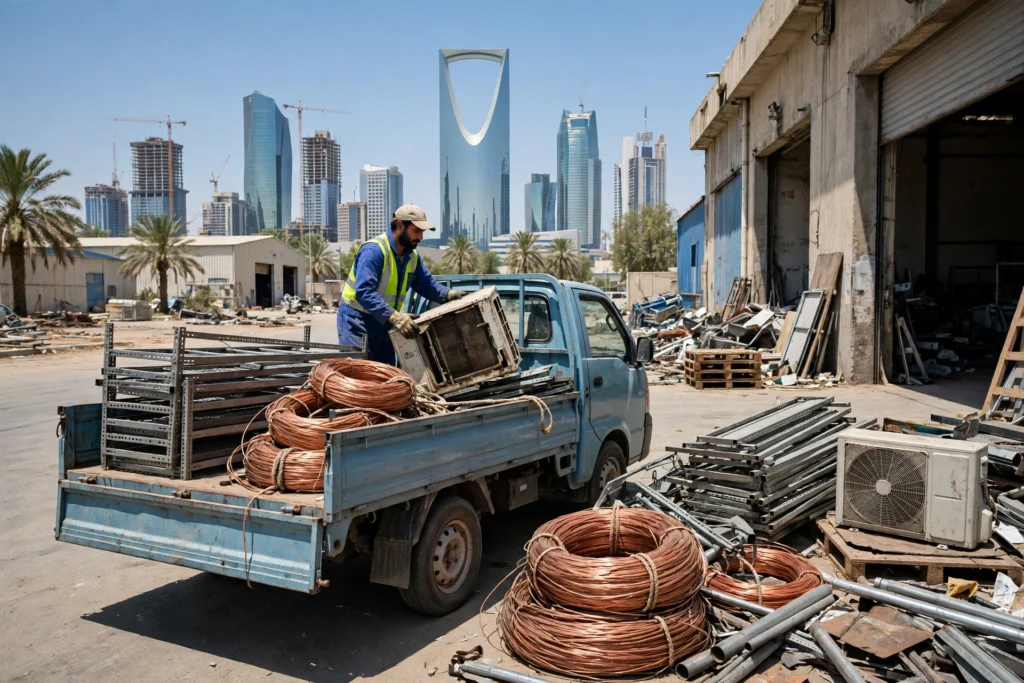 26 Oct 2026Selling Scrap in Riyadh: A Guide for Homes and WorkshopsWritten by Ameer Hamza|Published on October 26, 2026 Riyadh is a city that replaces things constantly. Air conditioners run for most of the year…Read the guide →
 24 Oct 2026Moving House in Jeddah? Clear Your Scrap Before You PackMoving house soon? Clear the scrap first — old metal, ACs and appliances sold before packing day mean fewer boxes, a tidier move and…Read the guide →
Similar Posts
Selling Scrap in Makkah: A Practical Guide for Hotels, Businesses and Homeowners
Hotel refits, shop fit-outs and home renovations in Makkah produce valuable scrap. What to sell, when to schedule it, and how a proper paid collection works.
Repair or Scrap? How to Decide What to Do With Your Old AC Unit
Another repair bill for a struggling AC? The signs it is near the end, when repairing still makes sense — and what your old unit is worth as scrap.
Selling Scrap in Dammam: A Guide for Homes and Industry
Written by Ameer Hamza|Published on October 26, 2026 Dammam is the Eastern Province’s industrial city, and its scrap pile looks different from anywhere else in the Kingdom. Alongside the usual home clearances — old appliances, air conditioners, water heaters — the city produces industrial scrap: steel beams, machinery parts, cable drums and workshop offcuts from…
Moving House in Jeddah? Clear Your Scrap Before You Pack
Moving house soon? Clear the scrap first — old metal, ACs and appliances sold before packing day mean fewer boxes, a tidier move and money back in your pocket.
Home Renovation Scrap in Jeddah: What to Sell, Keep or Recycle
Renovation leaves behind a pile of metal, wiring and old fixtures. Here is what is worth selling, what is worth keeping, and what should only be recycled.
What Decides Your Scrap Metal Price? A Seller’s Guide for Jeddah & Makkah
Two buyers, two different prices for the same metal. Here is exactly what decides your scrap metal price in Jeddah and Makkah — and how to make sure you get a fair one.