Moving House in Jeddah? Clear Your Scrap Before You Pack
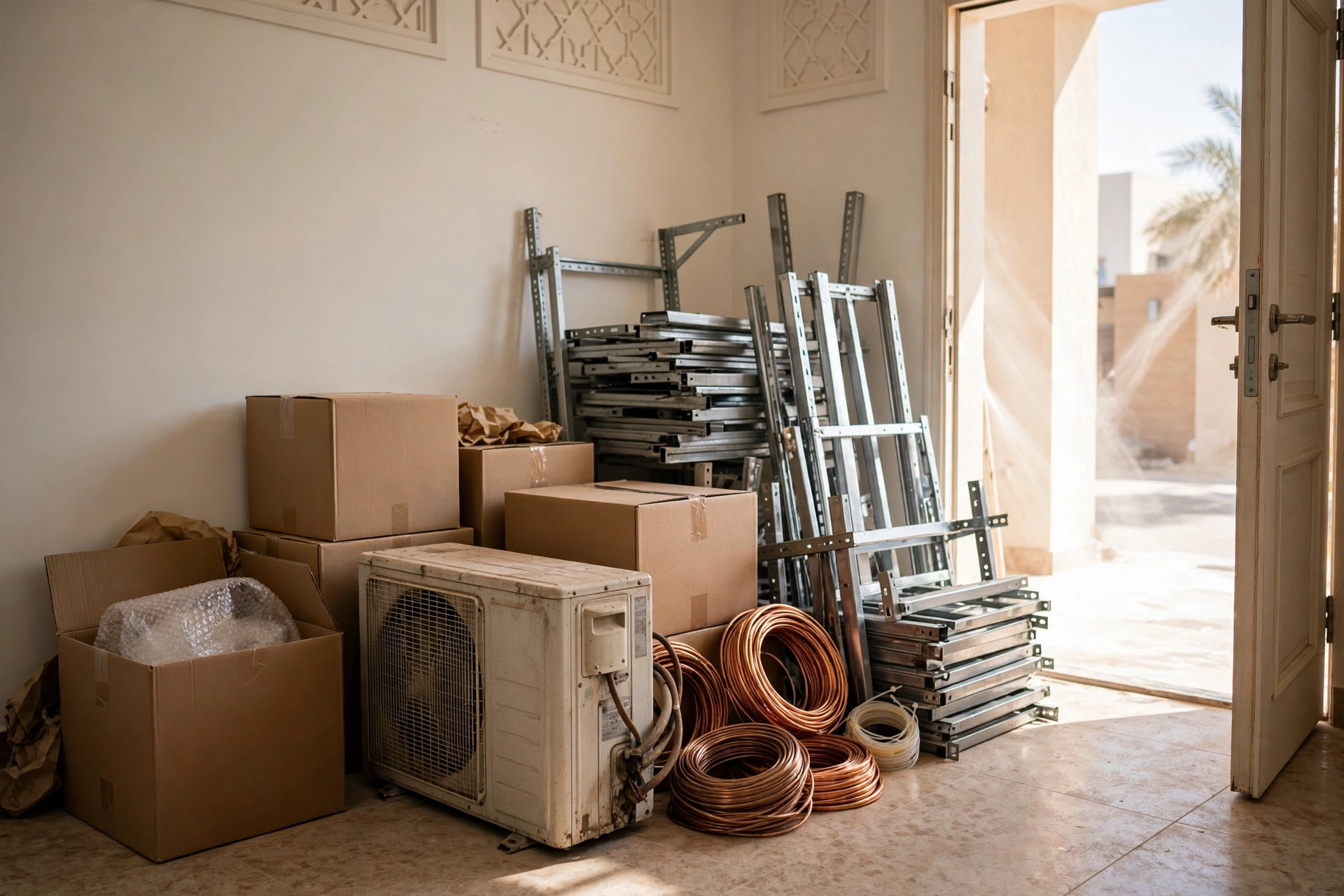
Every house move has a moment of truth, and it usually arrives when the boxes are half packed and someone opens the storeroom. Behind the things you meant to keep sits a second household: the old air conditioner from the spare room, the washing machine that gave up last summer, a tangle of cables, brass taps from the old bathroom, metal shelving, and a drawer of dead batteries nobody remembers buying.
Most people pay to move all of it, then pay again to get rid of it at the other end. Clearing the scrap before you pack is simpler, cheaper, and often pays for a small part of the move itself. The trick is doing it in the right order, before the packers arrive.
1. Why clear scrap before you pack
Moving companies charge by volume and by labour, and every dead appliance you pack is volume you pay for twice — once to load it, once to unload it, and then a third time when you arrange disposal in a new neighbourhood where you know nobody. A scrap collection before moving day removes that whole category in one visit, from your old address, while you still know where everything is.
There is a second benefit that matters more than the money. Packing is decision-making, and every broken item you pick up costs you a decision. Clearing the scrap first leaves you with only real decisions — what to keep, what to give away, what to move — and the packing goes noticeably faster.
2. What to sell before moving day
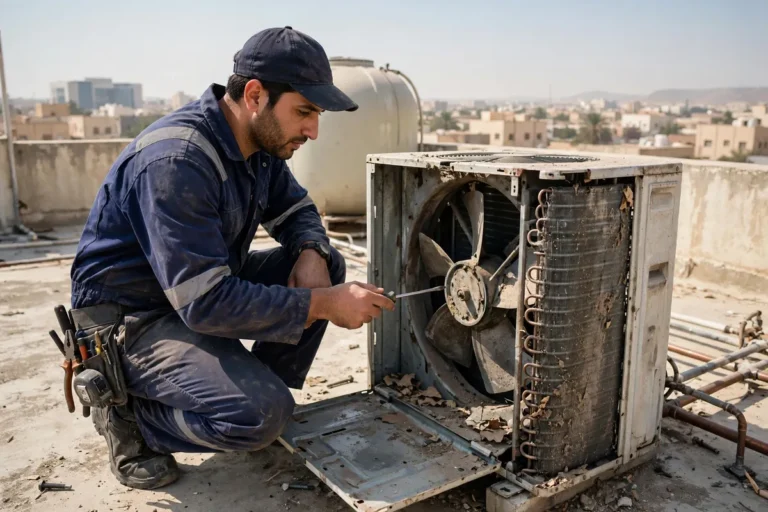
Start with the big metal items, because they take the most space and hold the most value. Old air conditioners are assessed as complete units, not as loose metal — our guide on repairing or scrapping an old AC unit explains that choice in detail. The same applies to water heaters, washing machines, motors, pumps and compressors: keep them complete and let the buyer grade them whole.
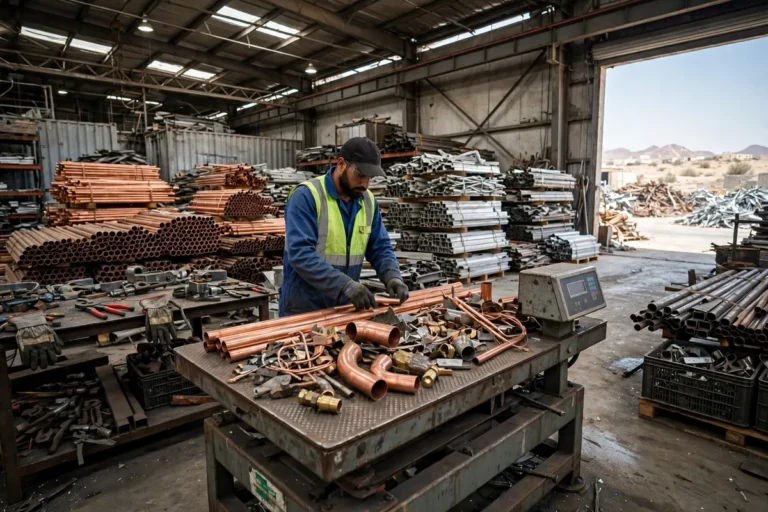
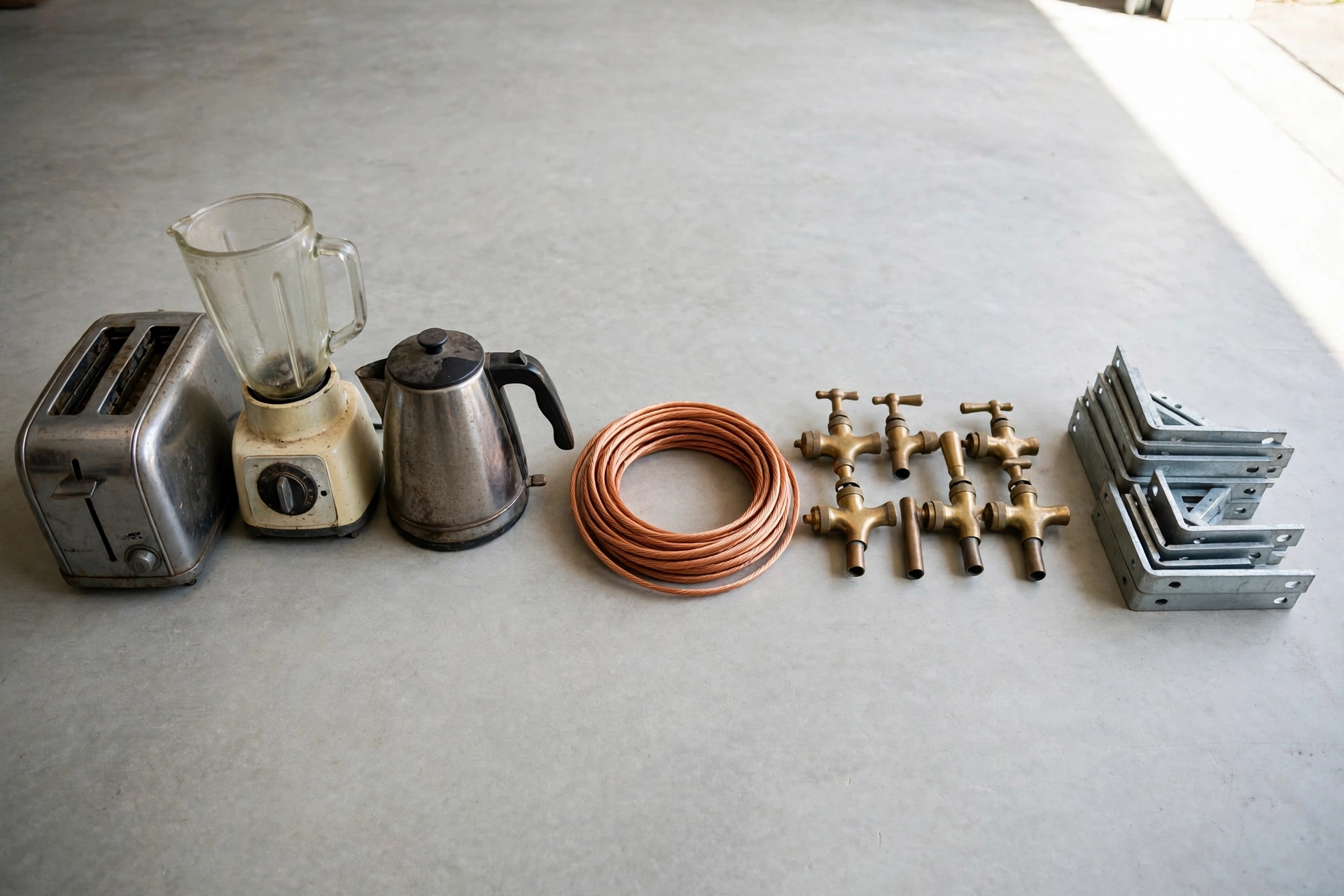
Then work through the smaller metal: copper cable from old installations, brass taps and fittings, aluminium frames and shelving, iron gates and brackets. If you have just renovated as well as moved, our guide to renovation scrap covers what to sell, keep and recycle from that pile too.
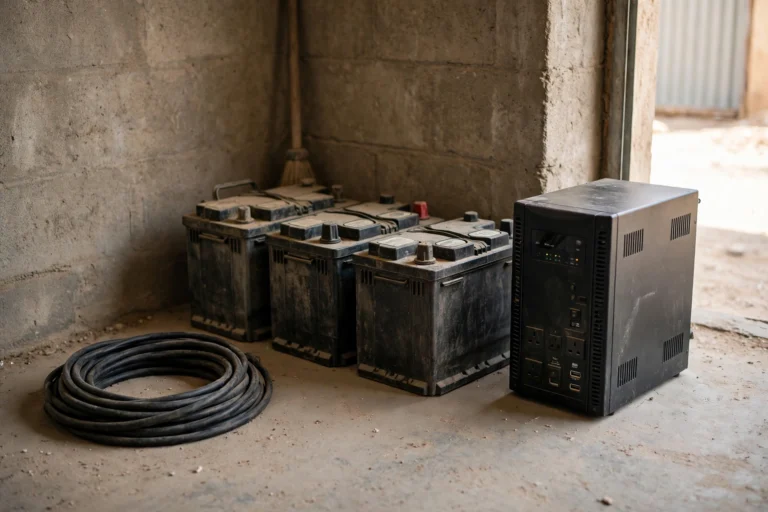
Do not forget the small stuff. Old car and UPS batteries, dead phone batteries and tangled charger cables all belong with the scrap load, not in the moving boxes — our guide to storing and selling old batteries safely explains how to handle them. If you are unsure whether something counts at all, the full list is on our What We Buy page.
3. What to keep for the new home
Not everything old should leave. Before the buyer arrives, set aside anything that still earns its place: working tools, spare cables and chargers you actually use, matching fixtures, and any appliance that works and fits the new home. A working second fridge, for example, is worth far more in your new kitchen than as scrap — move it, even if it costs a little extra on the truck.
The test is simple: if you would buy it again for the new house, keep it. If you are only keeping it because throwing it away feels wasteful, it is exactly what the scrap buyer is for.
4. What to leave for the movers, and what to leave for the scrap buyer
Two different collections, two different jobs. The movers take what you are keeping: furniture, clothes, kitchenware, working electronics, and anything with a place in the new home. The scrap buyer takes what has no place: broken and replaced items, stripped-out fixtures, dead appliances, and loose metal.
Keep the two piles physically apart — ideally in different rooms, or at least on opposite sides of the same room — and label them. Mixed piles are where mistakes happen: a working microwave packed into the scrap pile, or a dead heater loaded onto the truck. A clear split also lets each team work without waiting for the other.
5. A room-by-room quick pass
Work through the house once, room by room, with a single question for each item: is it moving, or is it scrap? The kitchen gives up dead appliances, old pots and broken shelving. The bathroom gives up old taps, fittings and the water heater if it is being replaced. The storeroom and balcony give up the most — old paint tins aside, nearly everything forgotten there is either scrap metal or e-waste. The roof and garage give up AC units, motors and cable.
One pass is enough. Do not open every drawer twice; the second pass is where good items start getting thrown away out of tiredness.
6. Timing it before the packers arrive
Book the scrap collection two or three days before packing starts, not on moving day itself. That leaves a buffer: if the pile turns out bigger than expected, there is time for a second trip, and the packers arrive to a house that contains only what is actually moving. These steps make the visit smooth:
- Keep the scrap pile in one place, away from the boxes that are moving.
- Keep complete units complete — an AC, a heater or a motor is graded as a unit.
- Tape battery terminals and keep loose batteries in their own bag.
- Leave a clear path to the pile and tell the buyer about stairs or lift access.
- Send clear photos before the visit so the buyer arrives prepared for your load.
Frequently asked questions
Should I sell scrap before or after moving?
Before, always. Selling from the old address means the scrap never takes space on the truck, and you deal with a buyer in an area you already know instead of arranging disposal somewhere new.
Will a buyer collect from an apartment building?
Yes — what matters is access. Let the buyer know about stairs, lift size and parking in advance so the visit is planned with enough hands and the right vehicle.
What about items fixed to the walls, like AC units?
Old AC units are collected as complete units, including the outdoor unit and copper piping where accessible. Tell the buyer in advance if a unit still needs uninstalling.
Can I sell scrap and move on the same day?
It is possible, but not recommended. A scrap collection two or three days before packing avoids two crews working in the same rooms and leaves a buffer if the pile is bigger than expected.
Do I need to clean or dismantle anything first?
No. Items are accepted as they are — dusty, complete, and still installed where relevant. Just keep different metals apart where you can, and keep the scrap pile separate from the moving boxes.
If you are moving house in Jeddah, Makkah, Taif, King Abdullah Economic City, Dammam or Riyadh, send us clear photos of what you are clearing through our free quote form — we will assess it, explain the grading, weigh it in front of you and pay on the spot, before your packers even arrive.
Related Guides
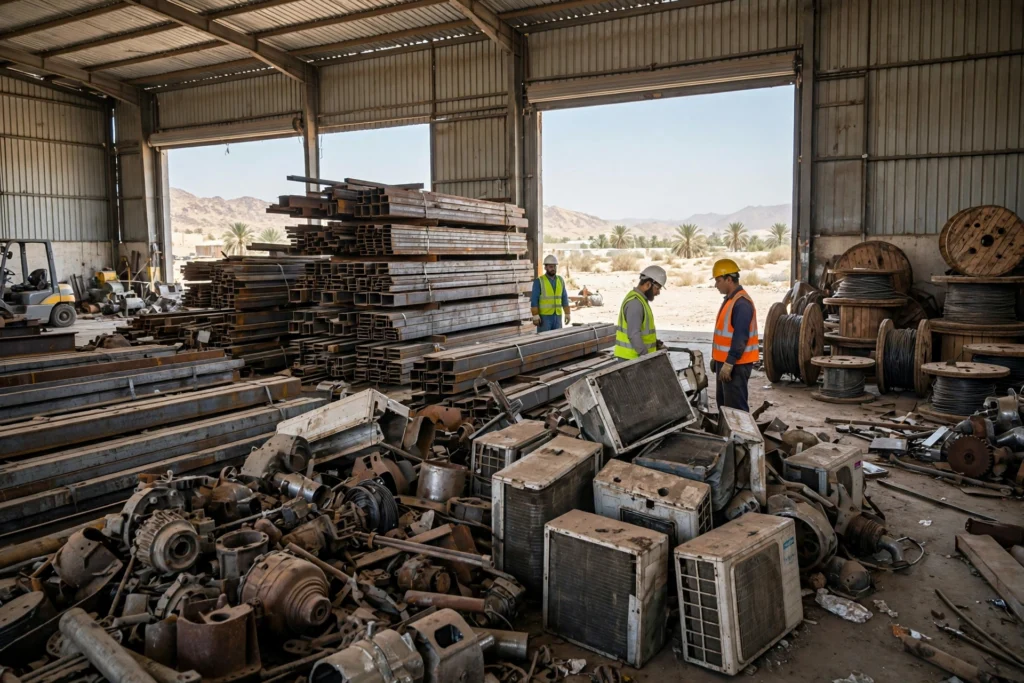 26 Oct 2026Industrial Scrap in Riyadh and Dammam: What to SellWritten by Ameer Hamza|Published on October 26, 2026 Household scrap is measured in items: one washing machine, one AC unit, a bag of cables.…Read the guide →
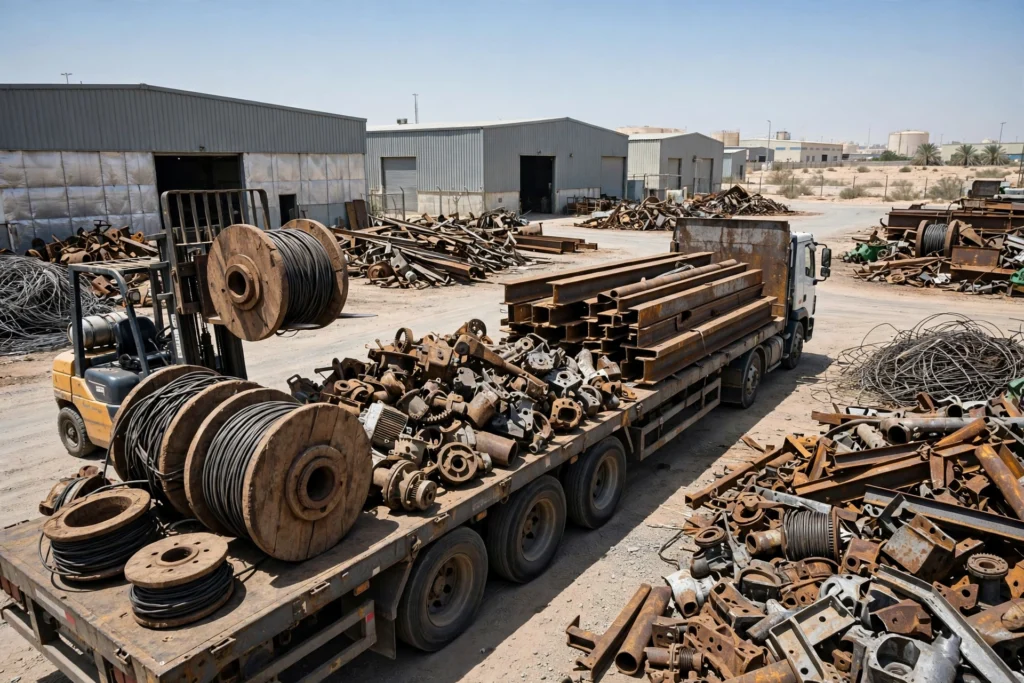 26 Oct 2026Selling Scrap in Dammam: A Guide for Homes and IndustryWritten by Ameer Hamza|Published on October 26, 2026 Dammam is the Eastern Province’s industrial city, and its scrap pile looks different from anywhere else…Read the guide →
 26 Oct 2026Selling Scrap in Riyadh: A Guide for Homes and WorkshopsWritten by Ameer Hamza|Published on October 26, 2026 Riyadh is a city that replaces things constantly. Air conditioners run for most of the year…Read the guide →
Similar Posts
Old Batteries and Electronics at Home: How to Store and Sell Them Safely
Old batteries and electronics can be valuable — and risky if stored badly. Here is how to handle them safely and sell what is worth selling.
Repair or Scrap? How to Decide What to Do With Your Old AC Unit
Another repair bill for a struggling AC? The signs it is near the end, when repairing still makes sense — and what your old unit is worth as scrap.
Selling Scrap in Dammam: A Guide for Homes and Industry
Written by Ameer Hamza|Published on October 26, 2026 Dammam is the Eastern Province’s industrial city, and its scrap pile looks different from anywhere else in the Kingdom. Alongside the usual home clearances — old appliances, air conditioners, water heaters — the city produces industrial scrap: steel beams, machinery parts, cable drums and workshop offcuts from…
What Decides Your Scrap Metal Price? A Seller’s Guide for Jeddah & Makkah
Two buyers, two different prices for the same metal. Here is exactly what decides your scrap metal price in Jeddah and Makkah — and how to make sure you get a fair one.
Home Renovation Scrap in Jeddah: What to Sell, Keep or Recycle
Renovation leaves behind a pile of metal, wiring and old fixtures. Here is what is worth selling, what is worth keeping, and what should only be recycled.
Selling Scrap in Makkah: A Practical Guide for Hotels, Businesses and Homeowners
Hotel refits, shop fit-outs and home renovations in Makkah produce valuable scrap. What to sell, when to schedule it, and how a proper paid collection works.