Home Renovation Scrap in Jeddah: What to Sell, Keep or Recycle

A renovation changes a home, but it also leaves behind a second project nobody planned for: the pile. Old window frames leaning against a wall, copper pipes cut out of the bathroom, a door nobody wants, rolls of cable, taps, hinges and brackets. Most of it ends up in one corner until someone finally deals with it — and by then, the valuable metal is often mixed with rubble nobody will take.
The difference between a pile that earns something and a pile that costs you a skip comes down to three decisions: what to sell, what to keep, and what to recycle. Made early, while the work is still going on, those decisions save space, save arguments with the contractor, and keep good metal out of landfill.
1. What a renovation actually leaves behind
Almost every home renovation in Jeddah produces the same mix. The bathroom gives up copper pipes, brass taps and fittings, and sometimes an old water heater. The kitchen gives up a sink, hinges, and old appliances. Windows and doors give up aluminium frames, steel hinges and handles. Rewiring gives up copper cable, sometimes in surprising quantities once the old runs come out of the walls.
Alongside the metal comes the rest: broken tiles, plasterboard, timber offcuts, old paint cans, broken glass and general rubble. This second group is not scrap. It needs a different route — a skip, the municipality’s construction waste arrangement, or your contractor’s own disposal. Mixing the two groups together is the single most common mistake, because once metal is buried under rubble, nobody will dig it out for free.
2. What to sell — the metal is where the value sits
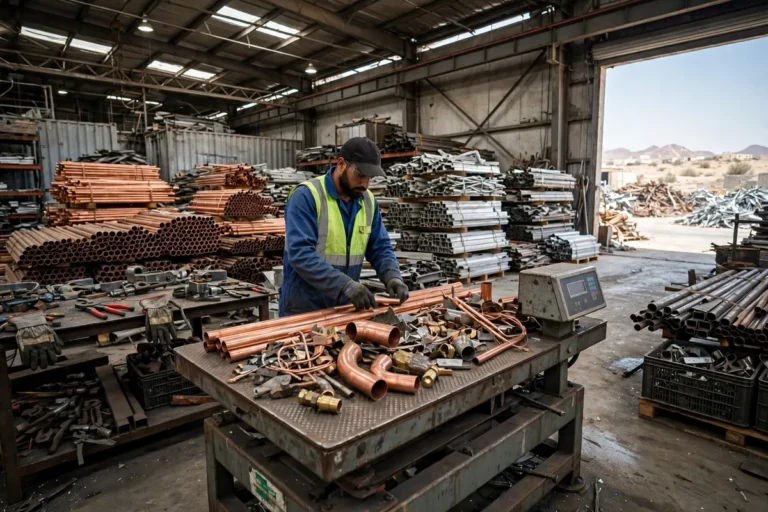
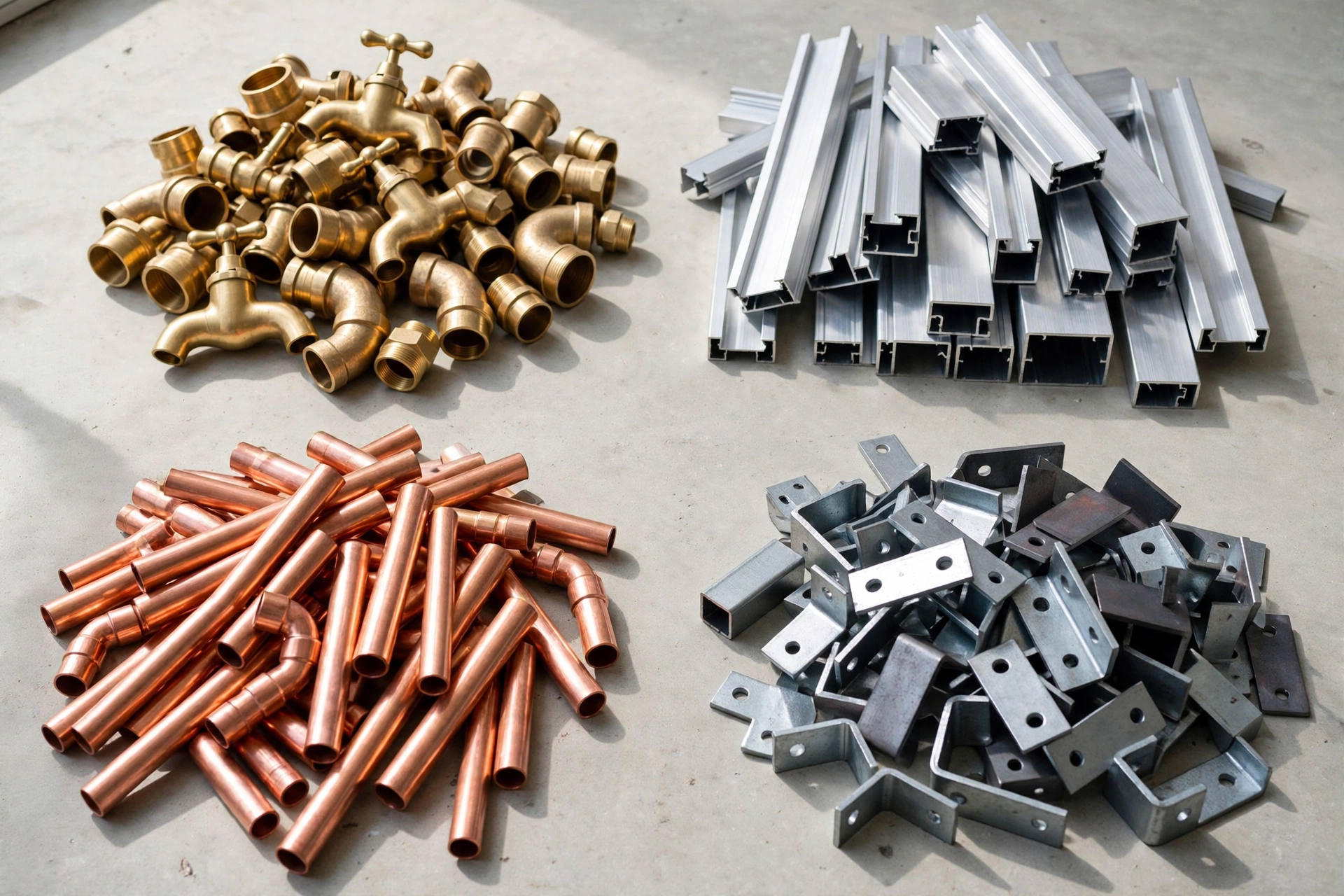
Start with the metals, because that is where a scrap buyer’s interest lies. Copper is the standout: pipes, cylinders and cable all contain it, and it is assessed on its own merits. Brass taps, valves and fittings are a separate metal and should never be thrown in with copper. Aluminium window and door frames are bulky but straightforward, and steel items — old gates, brackets, shelving and reinforcement offcuts — are taken by weight.
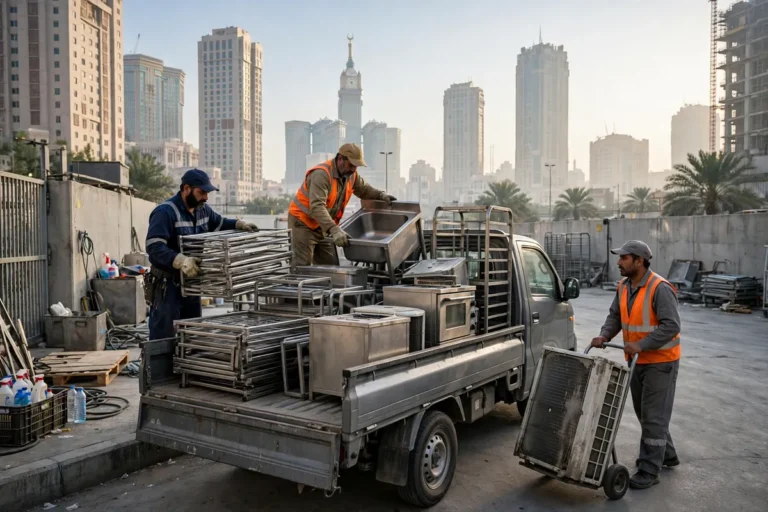
Complete items deserve their own decision. An old air conditioner removed during renovation is assessed as a unit, not as loose metal, because it contains copper, aluminium and a compressor in one package — our guide on repairing or scrapping an old AC unit walks through that choice. The same applies to water heaters, motors and pumps: keep them complete and let the buyer grade them whole.
If you are unsure whether something counts as scrap at all, the full list is on our What We Buy page — copper, brass, aluminium, cable, iron and steel, batteries and complete units are all covered.
3. What to keep before you call anyone
Not everything that comes out of a wall should leave the house. Before the clearout, walk the pile with a simple question for each item: could this be used again, either here or by someone else?
Solid wooden doors in good condition, quality taps and fittings, spare tiles from the same batch, and working light fittings are all worth keeping or passing on — they are expensive to buy new and often impossible to match later. Keep one or two lengths of matching pipe and a spare box of tiles for future repairs; renovation leftovers have a habit of becoming useful a year later, when the exact shade or fitting is no longer in the shops.
The rule of thumb is simple: if it still works and still matches your home, it is not scrap. If it is broken, stripped, or replaced for a reason, it probably is.
4. What to recycle, not sell
Some renovation waste is neither sellable nor reusable, and it still should not go to landfill mixed with scrap. Broken glass, mirrors, plasterboard, cement bags, paint tins and treated timber all need their own disposal route. Ask your contractor what he already arranges — most renovation contractors in Jeddah include rubble removal in their price, and it is far cheaper to let that happen as the work progresses than to arrange it afterwards.
Old paint and chemicals deserve special care: never pour them down a drain, and never mix them into a scrap load. Keep them sealed, labelled and separate until they can go to a proper facility.
5. Preparing it for collection
When the sell pile is decided, a little preparation makes collection faster and the assessment fairer. These steps make a real difference:
- Keep each metal in its own pile — copper with copper, aluminium with aluminium, brass apart from both.
- Pull rubble, tiles and timber out of the metal piles before the buyer arrives.
- Keep complete units complete — an AC, a heater or a motor is graded as a unit.
- Leave a clear path to the pile and, if it is upstairs, a way to bring items down.
- Send clear photos before the visit so the buyer arrives prepared for your load.
6. Timing it with your contractor
The best time to arrange a scrap collection is before the renovation finishes, not after. While workers are still on site, heavy frames and pipes can be moved easily, the lift or stairs are already in use, and there is somewhere to put sorted piles. Once the painters have been through and the new floor is down, dragging a steel gate across it is nobody’s idea of a good time.
A practical rhythm is two collections: one mid-renovation, when the strip-out waste is at its peak, and one at the end for the last fittings and offcuts. Mention the plan to your contractor early — most are glad to keep the metal separate if they know someone is coming for it, and it keeps their own site tidier too.
Frequently asked questions
Is renovation scrap worth selling, or should I just skip it all?
The metal part is usually worth selling — copper, brass and aluminium all have real value, and a buyer collects from your door. The rubble part is not scrap and belongs in construction waste disposal. Separating the two is what makes the difference.
Do I need to strip paint or fittings off frames before selling?
No. Aluminium frames are accepted with handles and hinges attached, and painted metal is graded as it is. Just keep different metals apart rather than stripping everything down.
Will a buyer collect from an apartment, or only villas?
Collection covers homes of every size, including apartments — what matters is access. If items are upstairs, let the buyer know in advance so the visit is planned with enough hands.
What happens to broken tiles and plasterboard?
Those are construction waste, not scrap. Your contractor’s rubble removal is usually the right route; keep them out of the metal piles so they do not slow down the scrap collection.
Can I sell scrap while the renovation is still going on?
Yes, and it is often the best time. A mid-renovation collection clears space for the workers and lets you sell the strip-out metal before it gets mixed with finishing waste.
If you have renovation scrap to clear in Jeddah, Makkah, Taif, King Abdullah Economic City, Dammam or Riyadh, send us clear photos of what you have through our free quote form — we will assess it, explain the grading, weigh it in front of you and pay on the spot.
Related Guides
 26 Oct 2026Industrial Scrap in Riyadh and Dammam: What to SellWritten by Ameer Hamza|Published on October 26, 2026 Household scrap is measured in items: one washing machine, one AC unit, a bag of cables.…Read the guide →
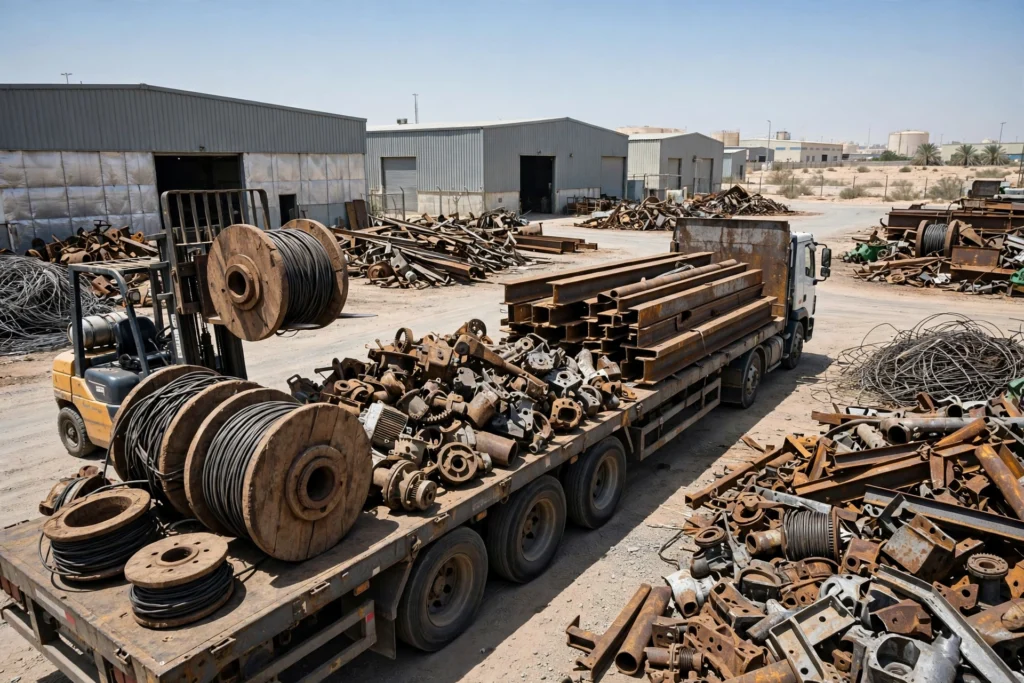 26 Oct 2026Selling Scrap in Dammam: A Guide for Homes and IndustryWritten by Ameer Hamza|Published on October 26, 2026 Dammam is the Eastern Province’s industrial city, and its scrap pile looks different from anywhere else…Read the guide →
 26 Oct 2026Selling Scrap in Riyadh: A Guide for Homes and WorkshopsWritten by Ameer Hamza|Published on October 26, 2026 Riyadh is a city that replaces things constantly. Air conditioners run for most of the year…Read the guide →
Similar Posts
Old Batteries and Electronics at Home: How to Store and Sell Them Safely
Old batteries and electronics can be valuable — and risky if stored badly. Here is how to handle them safely and sell what is worth selling.
What Decides Your Scrap Metal Price? A Seller’s Guide for Jeddah & Makkah
Two buyers, two different prices for the same metal. Here is exactly what decides your scrap metal price in Jeddah and Makkah — and how to make sure you get a fair one.
Selling Scrap in Makkah: A Practical Guide for Hotels, Businesses and Homeowners
Hotel refits, shop fit-outs and home renovations in Makkah produce valuable scrap. What to sell, when to schedule it, and how a proper paid collection works.
Selling Scrap in Dammam: A Guide for Homes and Industry
Written by Ameer Hamza|Published on October 26, 2026 Dammam is the Eastern Province’s industrial city, and its scrap pile looks different from anywhere else in the Kingdom. Alongside the usual home clearances — old appliances, air conditioners, water heaters — the city produces industrial scrap: steel beams, machinery parts, cable drums and workshop offcuts from…
Moving House in Jeddah? Clear Your Scrap Before You Pack
Moving house soon? Clear the scrap first — old metal, ACs and appliances sold before packing day mean fewer boxes, a tidier move and money back in your pocket.
Industrial Scrap in Riyadh and Dammam: What to Sell
Written by Ameer Hamza|Published on October 26, 2026 Household scrap is measured in items: one washing machine, one AC unit, a bag of cables. Industrial scrap is measured in loads: steel sections by the stack, cable by the drum, machinery by the piece, offcuts by the skip. The material is often the same — steel,…