Old Batteries and Electronics at Home: How to Store and Sell Them Safely

Almost every home has a small graveyard of old power: a car battery from the last change, a UPS that gave up during a summer cut, an inverter battery past its best, a drawer of dead phone batteries. They sit there because nobody is quite sure what to do with them — and that uncertainty is exactly the problem. Old batteries are not like other scrap. Stored badly, they leak, swell, and in rare cases catch fire. Stored well, they are straightforward to sell and to recycle.
This guide covers both sides: how to keep old batteries and electronics safe at home, and how to sell what is worth selling.
1. Why old batteries need care
A battery stores energy chemically, and age does not switch that chemistry off. Lead-acid batteries — the kind in cars and most home UPS units — contain acid and lead. If the case cracks or the terminals corrode, acid can leak onto whatever is underneath. Lithium batteries, found in phones, laptops and small electronics, can swell with age; a swollen lithium battery is damaged goods and should be handled gently and kept apart from everything else.
Heat makes everything worse. A battery left in direct sun, next to a water heater, or in a car boot through a Jeddah summer is ageing faster than one in a cool, shaded corner. None of this means batteries are dangerous to have at home — millions of homes store them without incident — but it does mean they deserve a deliberate spot rather than a forgotten corner.
2. How to store batteries safely at home
Safe storage is mostly common sense, done consistently. These steps cover it:
- Keep batteries upright, on a dry surface, away from direct sun and heat sources.
- Cover exposed terminals with tape so they cannot touch metal or each other.
- Keep damaged, swollen or leaking batteries apart from good ones, in a separate box.
- Never stack heavy batteries on top of small lithium batteries.
- Keep them out of reach of children, and never store them with flammable liquids.
If a battery is already leaking, do not handle it with bare hands. Gloves, a plastic bag, and a call to a buyer or recycler who handles batteries is the right response — and tell the buyer about the leak in advance so he arrives prepared.
3. What electronics are worth selling
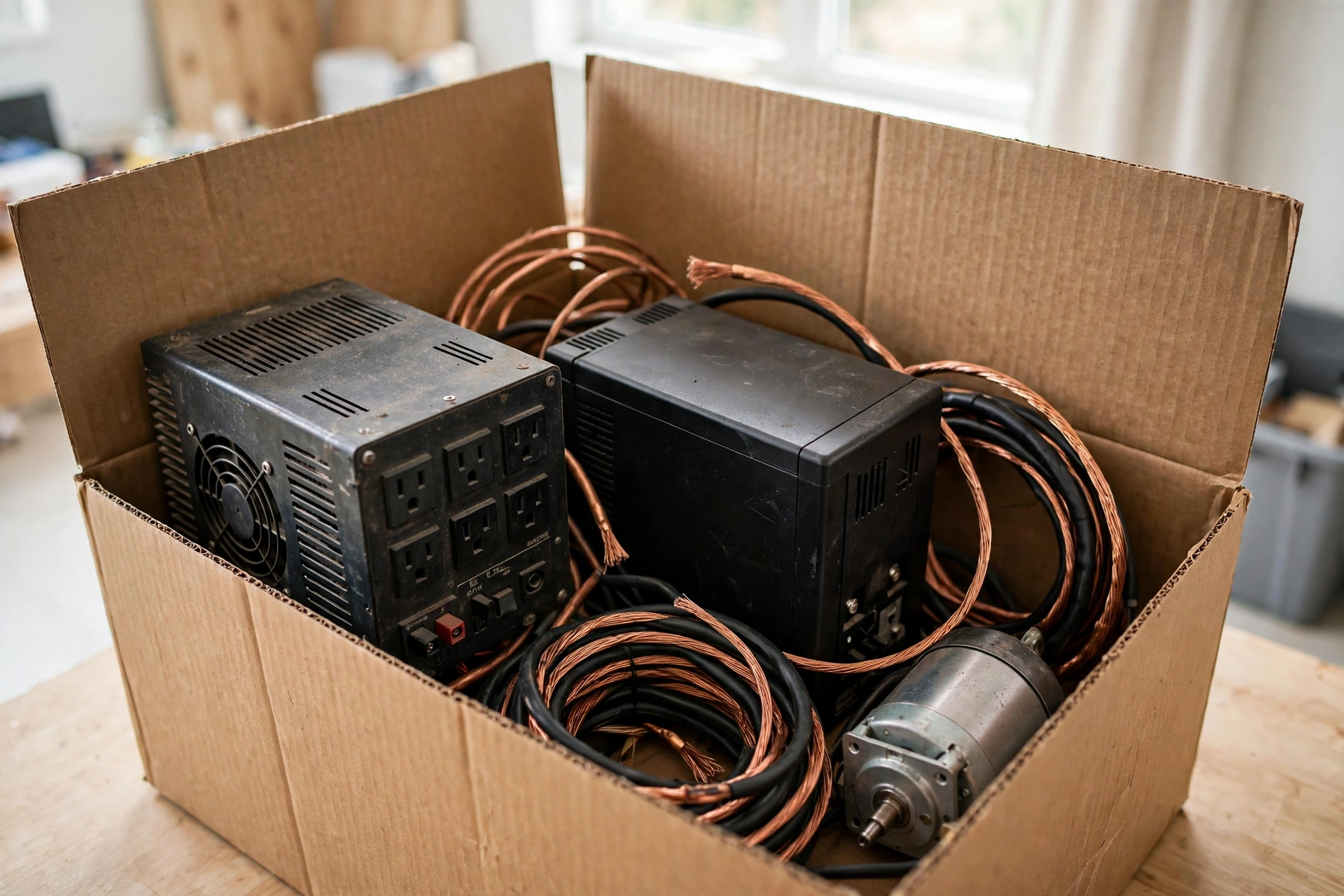
Not every dead device is scrap, and not every piece of scrap is worth the same. Car batteries, UPS batteries and inverter batteries are the most straightforward: they contain lead and are bought by weight, case and all. Old UPS units and inverters are taken as complete units, since they contain batteries, copper wiring and circuit boards together.
Copper cable — from old chargers, extension leads and household rewiring — is worth keeping separate rather than tangled into a box of mixed electronics. Electric motors, compressors and pumps are assessed as units, like the AC units covered in our guide on repairing or scrapping an old AC unit. Small items like dead phone batteries have little individual value, but they should still never go into household waste — hand them over with a larger load and they will be routed to proper recycling.
The full list of what we take is on our What We Buy page, including battery scrap and cable.
4. What never to do with old batteries
A short list of things that cause real harm. Never burn batteries — the fire releases toxic fumes and the heat can make them burst. Never puncture, crush or try to open a battery, swollen or not. Never throw batteries into household waste or a skip: in a compactor truck or landfill they are crushed, and that is when leaks and fires happen. Never pour battery acid down a drain, and never mix a leaking battery into a box of good ones.
If a lithium battery is swollen, hot, or smells unusual, leave it alone, move anything flammable away from it, and get it collected promptly rather than storing it for months.
5. Preparing electronics for the buyer
Preparation is simple and makes the visit smoother. Tape the terminals of loose batteries, keep lead-acid batteries upright in a box or tray, and put small lithium batteries in their own bag so they are not loose among heavy items. Keep complete units complete — a UPS with its battery still inside is easier to assess than a stripped shell. Send a photo of the load in advance, especially if any battery is damaged, so the buyer can plan the collection properly.
Weighing and grading happen in front of you, item by item, the same way as any other scrap — our guide to what decides your scrap price explains how assessment works in general.
Frequently asked questions
Can I sell a single old car battery?
Yes. Even one battery is collected, and it is worth more than leaving it in a corner. If you have several, keep them together and upright for the visit.
Is a swollen phone battery dangerous to keep at home?
It should not be ignored. Keep it away from heat and flammable material, do not puncture or bend it, and arrange collection promptly rather than storing it for months.
Do you take damaged or leaking batteries?
Yes, but tell us in advance. Damaged batteries are handled separately, and knowing beforehand means the collection is planned with the right containers.
Should I remove the battery from an old UPS before selling?
No — keep the unit complete. A UPS with its battery inside is assessed as a unit, which is simpler and usually better for you than a stripped shell.
Can batteries go in the normal household bin?
Never. Batteries crushed in waste trucks or landfill can leak and catch fire. They belong with a scrap buyer or a proper recycling route, even in small quantities.
If you have old batteries or electronics to clear in Jeddah, Makkah, Taif, King Abdullah Economic City, Dammam or Riyadh, send us clear photos of what you have through our free quote form — we will assess them, explain the grading, weigh them in front of you and pay on the spot.
Related Guides
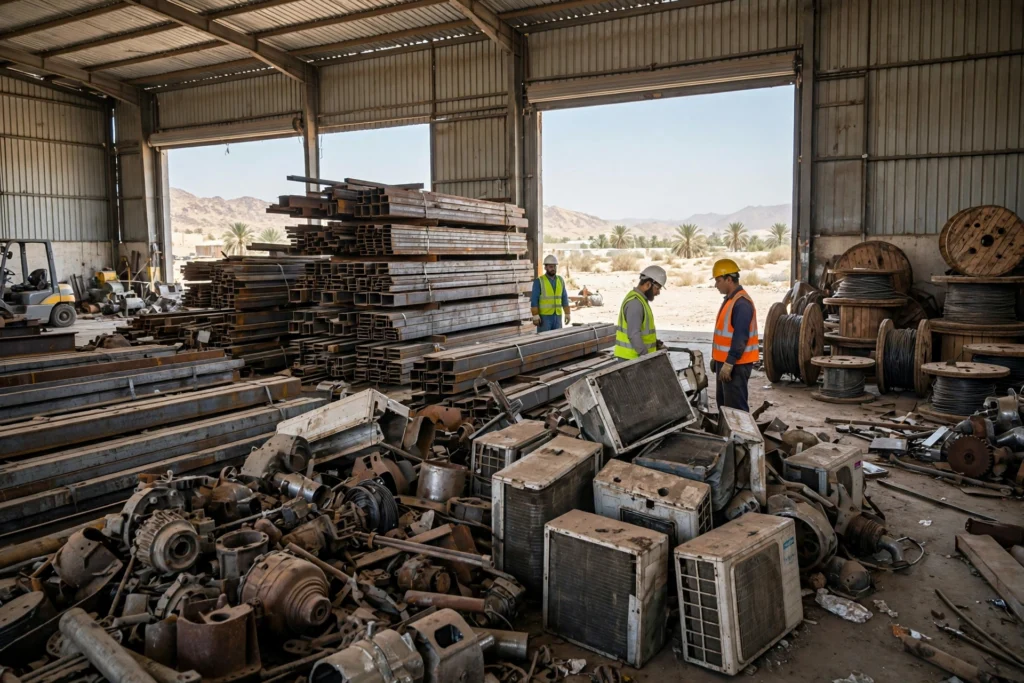 26 Oct 2026Industrial Scrap in Riyadh and Dammam: What to SellWritten by Ameer Hamza|Published on October 26, 2026 Household scrap is measured in items: one washing machine, one AC unit, a bag of cables.…Read the guide →
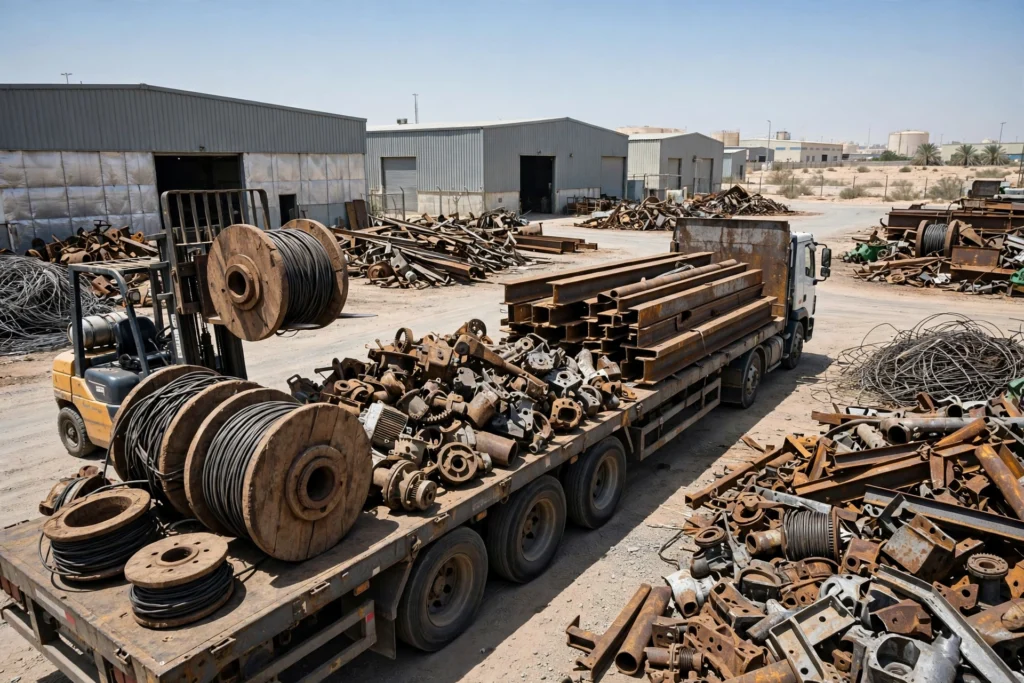 26 Oct 2026Selling Scrap in Dammam: A Guide for Homes and IndustryWritten by Ameer Hamza|Published on October 26, 2026 Dammam is the Eastern Province’s industrial city, and its scrap pile looks different from anywhere else…Read the guide →
 26 Oct 2026Selling Scrap in Riyadh: A Guide for Homes and WorkshopsWritten by Ameer Hamza|Published on October 26, 2026 Riyadh is a city that replaces things constantly. Air conditioners run for most of the year…Read the guide →
Similar Posts
Selling Scrap in Dammam: A Guide for Homes and Industry
Written by Ameer Hamza|Published on October 26, 2026 Dammam is the Eastern Province’s industrial city, and its scrap pile looks different from anywhere else in the Kingdom. Alongside the usual home clearances — old appliances, air conditioners, water heaters — the city produces industrial scrap: steel beams, machinery parts, cable drums and workshop offcuts from…
Home Renovation Scrap in Jeddah: What to Sell, Keep or Recycle
Renovation leaves behind a pile of metal, wiring and old fixtures. Here is what is worth selling, what is worth keeping, and what should only be recycled.
What Decides Your Scrap Metal Price? A Seller’s Guide for Jeddah & Makkah
Two buyers, two different prices for the same metal. Here is exactly what decides your scrap metal price in Jeddah and Makkah — and how to make sure you get a fair one.
Selling Scrap in Riyadh: A Guide for Homes and Workshops
Written by Ameer Hamza|Published on October 26, 2026 Riyadh is a city that replaces things constantly. Air conditioners run for most of the year and get swapped out, workshops turn over tools and fittings, warehouses clear out shelving and cable, and homes renovate room by room. All of that leaves behind the same thing: metal…
Moving House in Jeddah? Clear Your Scrap Before You Pack
Moving house soon? Clear the scrap first — old metal, ACs and appliances sold before packing day mean fewer boxes, a tidier move and money back in your pocket.
Selling Scrap in Makkah: A Practical Guide for Hotels, Businesses and Homeowners
Hotel refits, shop fit-outs and home renovations in Makkah produce valuable scrap. What to sell, when to schedule it, and how a proper paid collection works.